
Performance Physical Therapy in Bend: How to Come Back Stronger Than Before Injury
You live in one of the best places in the country to move hard. Trail runs at sunrise, laps on the Phil's Trail network, afternoon training sessions, powder days on Bachelor. When an injury sidelines you, it hurts more than your body. It cuts into your identity, your routine, and your goals.
Maybe you have already tried traditional physical therapy. You were rushed through a short visit, handed a sheet of generic exercises, and sent home with no clear plan to get back to the level you actually want. You deserve better than that.
This guide explains what performance physical therapy is, how it differs from standard care, and how Capacity Performance Therapy helps Bend athletes and active adults recover, rebuild, and return stronger than before.
What Is Performance Physical Therapy?
Performance physical therapy is an approach built around your athletic goals, not just your pain level. Traditional rehab often aims to get you back to normal daily function. Performance care asks a bigger question: what does your body need to handle the demands of your sport, and how do we build that capacity?
Pain Relief Is Only the Starting Line
Pain relief matters, but it does not tell you whether your tissues can handle a 20-mile trail run, a heavy overhead lift, or a technical downhill. Performance care uses objective testing, progressive strength work, and sport-specific training to close the gap between "not hurting" and "ready to perform."
A Root Cause Philosophy
Injuries rarely come out of nowhere. They usually point to something deeper, such as a strength deficit, a mobility restriction, a training load spike, or a movement pattern that overloads one area. At Capacity Performance Therapy, we look for the reason your injury happened so we can fix it, not just calm the symptoms.
How Is Performance PT Different From Traditional Physical Therapy?
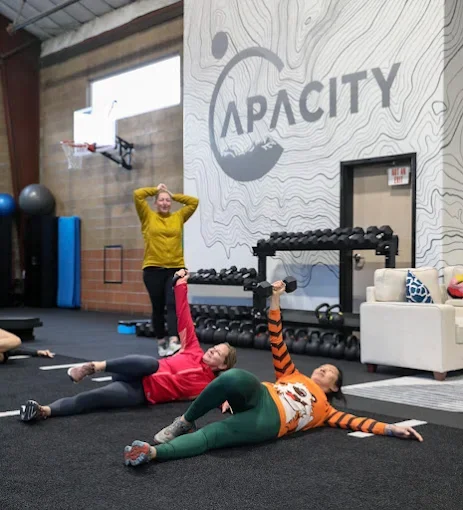
The biggest difference is time and attention. Every session at Capacity Performance Therapy is one-on-one for 60 minutes with a Doctor of Physical Therapy. There are no aides handing off your exercises and no double-booking. The clinician who evaluates you is the one who treats you, every visit.
That structure changes what is possible. You can expect:
Detailed evaluations that go beyond the sore spot
Hands-on treatment and exercise coaching in the same session
Treatment plans that adjust as you progress, not a fixed template
Clear explanations of what is happening and why
No referral needed to get started
This model allows care to be built around your outcomes rather than around the limits of a high-volume schedule. Learn more about the philosophy behind it on the Capacity Performance Therapy About page.
Who Is Performance Physical Therapy For?
Performance PT is for people who train with purpose and want to keep doing what they love at a high level. In Bend, that often includes:
Trail runners dealing with knee, Achilles, hip, or foot pain
CrossFit athletes managing shoulder, low back, or hip issues under heavy load
Mountain bikers recovering from crashes or dealing with overuse pain
Skiers and snowboarders returning from knee injuries or building strength for the season
Active adults who want to stay strong, mobile, and resilient as they age
You do not need to be a professional athlete. You just need to care about how you move and how well you perform.
What Sports Science Testing Will You Get at Capacity Performance Therapy?
Guessing is not a strategy. Objective data shows what your body can actually do, where it is falling short, and how much progress you are making. Capacity Performance Therapy uses technology that is often reserved for professional teams.
Testing That Guides Your Plan
Force Plate Testing: Measures how you produce and absorb force, revealing strength, power, and side-to-side differences.
VALD Testing: Provides objective strength and performance data so progress is tracked with numbers, not hunches.
Running Gait Analysis and Running Form Assessment: Examines how you move through your stride to spot inefficiencies and overload patterns.
Isokinetic and Dynamometer Testing: Measures muscle strength through controlled movement to uncover deficits that are easy to miss by feel.
Lactate Threshold Testing: Helps endurance athletes understand their training intensities.
Movement Screen and Functional Movement Assessment: Identifies limitations or compensations in basic movement patterns.
Return-to-Sport Testing: Provides objective criteria before you return to full activity.
Titleist Performance Institute (TPI) Testing: Assesses movement quality specific to golf performance.
Why Return-to-Sport Testing Matters
Research on ACL recovery shows that athletes who return to sport before meeting strength and function benchmarks face a significantly higher risk of reinjury. Clearing yourself based on "it feels fine" is a gamble. Testing replaces that gamble with clear, measurable goals.
Which Treatments Help You Recover and Perform Better?
Your plan is built from your evaluation and testing results. Care at Capacity Performance Therapy integrates hands-on treatment, training, and recovery work so you are not bouncing between providers.
Hands-On Care
Manual therapy helps restore motion and reduce tissue tension so you can train well. Depending on your needs, that may include:
Joint mobilization and manipulation
Myofascial release
Soft tissue mobilization
Trigger point therapy
Cupping and scraping
Assisted stretching
Sports massage therapy
Strength and Performance Training
Strength is the foundation of resilient tissue. Your program may include therapeutic exercise, neuromuscular re-education, balance and proprioception training, plyometrics, and return-to-sport progressions. Blood Flow Restriction (BFR) training is also used when appropriate. Research supports that low-load training with BFR can build strength and muscle size, which is especially valuable when heavy loading is not yet an option.
Recovery and Lifestyle Support
You do not get stronger in the clinic alone. You get stronger when your body recovers and adapts. Clinicians at Capacity Performance Therapy coach you on recovery strategies and may incorporate tools such as taping (KT and athletic taping), cold therapy, heat therapy, and breathwork and diaphragmatic training to support your progress.
Which Injuries and Conditions Can Performance PT Address?
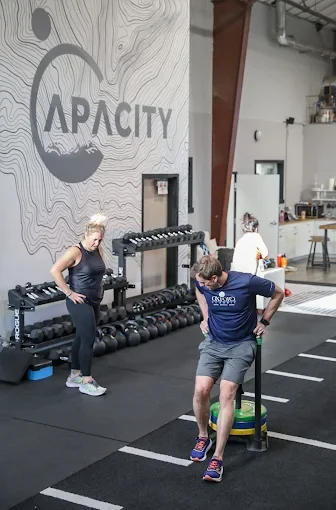
Bend athletes tend to see patterns in the injuries they face. Capacity Performance Therapy treats a wide range of musculoskeletal conditions, including:
Knee: ACL injuries, meniscus injuries, runner's knee (patellofemoral pain), IT band syndrome
Hip: hip pain, hip impingement (FAI), labral tears, groin pain
Foot and lower leg: Achilles tendinopathy, plantar fasciitis, ankle sprains, shin splints, hamstring strains
Shoulder and arm: rotator cuff pain, shoulder impingement, frozen shoulder, tennis elbow, golfer's elbow, wrist pain
Spine: low back pain, mid back pain, sciatica
The approach is consistent across all of them. We identify why the problem developed, restore motion and strength, then build the capacity to handle your sport. A runner with knee pain, for example, may benefit from running gait analysis, hip and calf strengthening, and a structured return-to-running progression rather than rest alone.
You can see the full range of care on the Capacity Performance Therapy services page.
Can Prehab Help You Avoid Injury Before It Happens?
Yes, and it is one of the smartest investments an active person can make. Prehab means identifying weak links before they become injuries. If you are heading into ski season, training for a trail race, or ramping up your lifting volume, a proactive screen can show where you are most vulnerable.
A prehab plan may include:
A movement screen and strength testing
Targeted mobility and stability work
Load management guidance for your training
Sport-specific strength and power development
Prehab is also a strong fit if you are preparing for surgery. Entering a procedure with better strength and movement quality can set you up for a more effective rehab.
Conservative Care and Post-Surgical Rehab
Not every injury requires an operation. For some conditions, such as certain ACL injuries, hip impingement, and meniscus injuries, a structured conservative program can be a reasonable first step. The right path depends on your diagnosis, your goals, and input from your physician or surgeon when needed.
Conservative Care
A well-designed program focuses on strength, movement quality, and progressive loading. Many people find this approach allows them to return to activity without surgery, and it can also clarify whether surgery is truly necessary.
Post-Surgical Rehab
If you do have surgery, rehab becomes the most important phase of your recovery. One-on-one sessions at Capacity Performance Therapy guide you through each stage, from restoring motion to rebuilding strength to sport-specific training. Objective testing at key milestones helps determine when you are ready for the next step. The goal is not to return to baseline. It is to come back stronger than before.
What Should You Expect at Your First Visit?
Your first visit is a full 60 minutes with a Doctor of Physical Therapy. No referral is needed to book.
Here is what typically happens:
Your story: Your injury history, training habits, frustrations, and goals are discussed in full.
Your assessment: Movement, strength, and mobility are examined, and sports science testing may be included when appropriate.
Your findings: Your clinician explains what was found and what is likely driving your problem.
Your plan: Treatment, training, and recovery steps are mapped out, and work begins right away.
You leave with clarity, direction, and a plan you can trust.
Ready to Train Stronger in Bend?
You have goals to chase and trails, slopes, and barbells waiting. Do not settle for rushed care that only gets you back to baseline. At Capacity Performance Therapy, you get an expert, an hour of focused attention, and a plan built to help you come back stronger.
Ready to get started? Visit Capacity Performance Therapy to book your first visit today. You can also read more in the Bend physical therapy guide to see how active people across Central Oregon are performing at their best.
